
What the Architectural Design Process Really Looks Like (And Why It Matters To Your Project)
From the first phone call to a tailored project plan — here's how the design journey actually works, explained in plain language.
It is totally understandable that starting a new home or renovation design and build journey can be both exciting and stressful at the same time. If you have never done something like this before, getting a clear idea of how it will look from a bird's eye view can be helpful.
One of the shortcomings that I see in the typical practice of Architecture is that Architects and Designers are very good at explaining what they do using terminology and assumptions that other Architects and Designers understand. Fair enough, but for the average member of the public who has no experience in Architectural practice, it can seem like listening to another language.
One of the things that I started to focus on in 2019 was how I talked to clients — not in terms of respect, but rather in terms of language. What was it that they needed to hear or understand, and how could I explain it in a way that unlocked comprehension and understanding for them? What I came to appreciate is that we need to convey the value of things and what they do to help clients, rather than speak about the to-do list we face as professionals. It's not about explaining the behind-the-scenes mechanics; it's about conveying the role and journey of the client as they move through the various stages of their project.
The Purpose of the Phone Call
So how do I go about this? Well, firstly a phone chat is always a great start. I often haven't met my clients before this moment, while they may have consumed some of my social media content and seen me talk about Architecture in reels and videos. It's good to get a sense of what each other is like and how there can be a mutual connection between what is required in terms of services and what is needed in terms of value and results. There is absolutely no point in continuing in a process if the project that the clients are presenting doesn't align and fit with the Architect or Designer that they are talking to.
The Value of the Paid Design Consultation
I get mixed reactions when explaining that the next stage is a paid consultation. There has been a historical practice of Architects and Designers offering free one-hour meetings to get a brief and provide a fee proposal. This is why that part is charged for at Smart Living Spaces. When advice is given freely, there is no incentive for that advice to be investigated and stood behind. Also, when a service is charged for, you effectively enter into a legal contract. So the Architect or Designer now has a legal responsibility to you — to stand behind the advice and information that they provide to you. The key is to understand what the deliverables are before committing to a consultation. Here is what it does for your Architectural Designer on the other end: they know you are committed to at least taking the first step, so there is a willingness to give value, and they can commit time and resources to giving you sound, investigated advice. Lastly, the benefit for the client — when they receive a project plan tailored to their specific brief, budget and site — is that if it doesn't stack up, they haven't entered into an expensive design exercise investing hundreds or thousands of dollars.
Steps in the Process
At all stages of my Design Process, with a deep understanding of my clients' aspirations, budget and constraints, I am able to show them the potential costs and steps that their project needs to go through to move from conception to completion. This provides a road map for my clients — showing them where they move from one stage to another, what each stage delivers, and how it is charged for. As other consultants may be required, both in terms of the aspirations and steps in the process, it also offers the opportunity to get some rough figures into a project budget, so that when assessing the financial breakdown of the project, there is proper consideration. No one has a crystal ball, but suddenly discovering consultant fees that can run into the thousands later in the process can be overwhelming — and might have changed the direction of the project early on, had they been known about. It also allows for setting some realistic expectations around timeframes. When you understand the stages your project needs to move through and how long they are likely to take, it removes uncertainty, allowing you to plan with more awareness of how to fit your life around this exciting journey ahead of you.
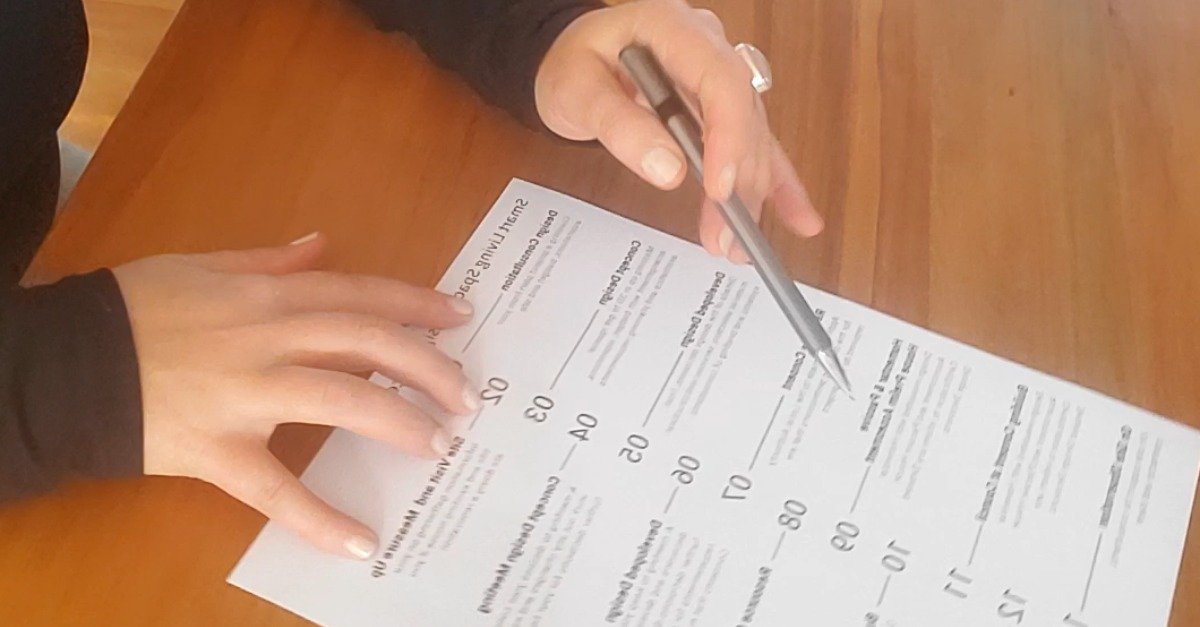
Understanding the Architectural Process Steps
Building in Detail Level, One Stage at a Time
I find explaining how each stage works and what it covers critical to clients understanding what decisions they need to make, and when, and what to expect in terms of deliverables in the form of plans, drawings, sketches and services. Each stage in the Architectural process has been created to build detail onto the last stage. Creativity and Architecture are largely a series of decisions that lead to the development of solutions. Starting those decisions at a high level — with a direction and vision in mind — is good, and then slowly developing those directions in detail, specification and calculations in a process-driven way is key to making the process work for you, rather than working against you with stress, overwhelm and redesign work. Some people are very quick to dive into the detail early on, which is great, but big decisions still need to be made. Others stay on the initial stages, too fearful of getting it wrong from the start. A practical and thoughtful process lets decisions and detail unfold in the most beneficial manner.
Understanding your project from the outset, and then moving through the journey in an informed way that is also specific and suited to your project, really is the smartest way to create a healthy and valuable new home for you and your family. It all starts with a chat.
To book a complimentary call with me and discover whether a Design Consultation is the right next step for your project, simply choose a time that works for you using the link below.