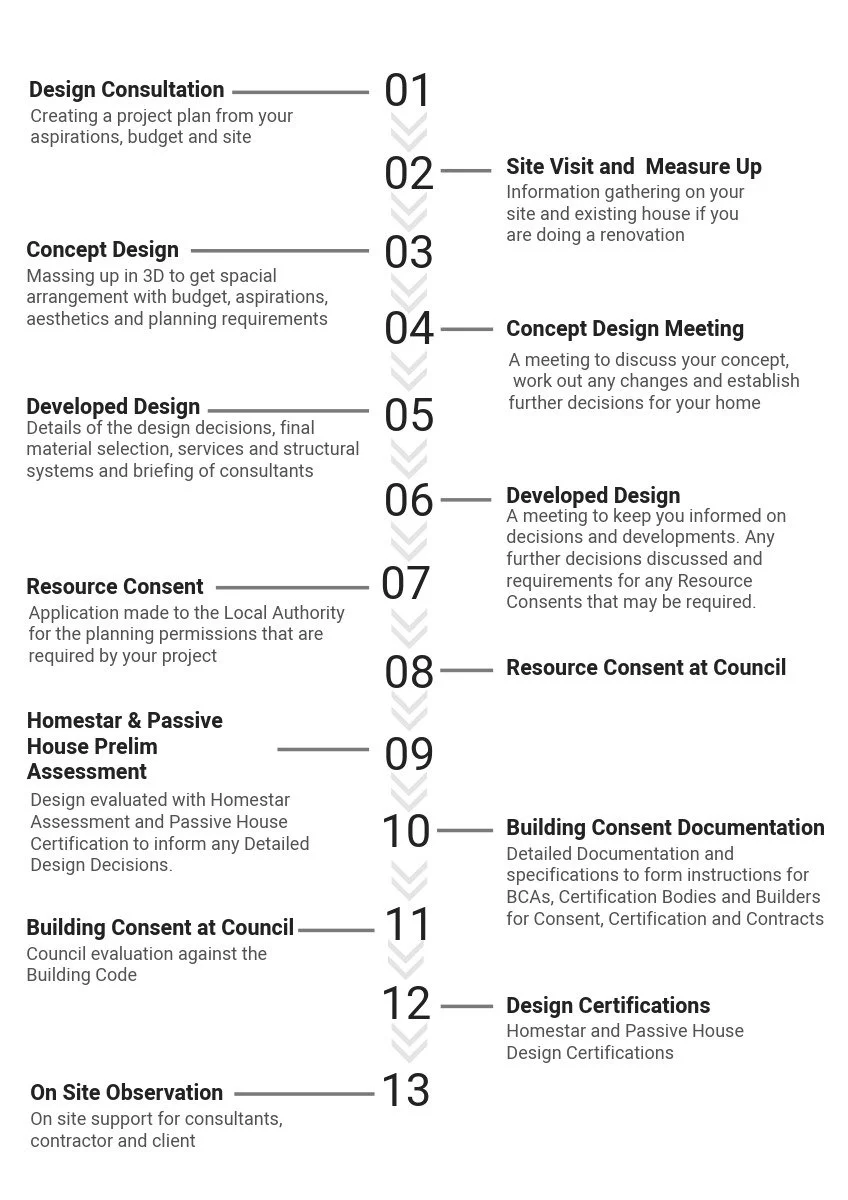
The Architectural Process
-
Design Consultation
This is a 1-hour consultation with Sharon to find that sweet spot between budget, aspirations, requirements, and constraints. Some investigation is done before our meeting so we can have a productive and informed discussion. Once we find that sweet spot, we can then map out the steps in your process and list the consultants required. After our consultation you get a report breaking down our discussion and decisions and includes very high-level preliminary figures for your budget.
-
Site Visit and Measure Up
For new builds its essential to visit the site and see exactly what we are dealing with. If you have an existing house that we are altering or adding to, accurate and up to date information is required to formulate existing plans and gather sufficient information about the existing structure to inform the proposed design in a feasible, accurate and smart way. Renovating or altering is more expensive process relative to a new build, so we want to use what’s there as much as possible.
-
Concept Design
This is the Architectural response to that sweet spot. Sometimes it’s good to show what a design could grow into at a later stage if future planning is something you are considering. This is where we establish the aesthetic, feel and spatial relationships of your new home. Everyday use, and the form of the building are carefully considered along with a basic structural idea. This stage is here to get what you want to do established so we can then work on the detail on how it is going to happen and how it needs to come together.
-
Concept Design Meeting
Before our meeting you are sent the design electronically, so you have time to digest it all. The purpose of this is that you will have questions and changes to make, so I want you to have time to digest the design and bring to our meeting all your questions, suggestions and changes.
-
Developed Design
This is the stage where we make any changes to the Concept Design and work out the structural approach and outline specifications. The reason for this, is it empowers you to be in control of time spent on your decisions by not fixing a fee which presumes lots of client changes. The purpose of this stage is to develop the concept to the point where other consultants can be brought into the conversation and also where a Resource Consent, if required, can be applied for. It also allows enough detail for a fixed fee to be given for the next stage. This stage is typically done on a time charge. basis with an expected estimate for your project.
-
Resource Consent (If required)
This applies to some projects only and is effectively asking your Local Building Authority to give special permission to break one or more of the planning restrictions that apply to your site. This application does involve additional work and also often the use of a Planner who is a consultant to your project. This stage is typically done on a time charge basis with an expected estimate for your project.
-
Preliminary Homestar and Passive House Evaluation
Homestar and Passive House are not add ons in the Design Process, so they are best included in the design early on. This stage is a collection of all that design thinking to draft the documentation that informs the building consent documentation and is required by Homestar and Passive House. This step avoids re-design in the Building Consent Stage.
-
Builidng Consent
This is the detail and most intense design stage. This is a set of calculations, details and instructions for your builder, in the form of plans calculations and specifications that set out what and how to constructed. It also explains to your local BCA (Building Consent Authority) how your design meets at least the minimums or exceeds the requirements of the New Zealand Building Code. This set can be used to start pricing by your builder and forms the basis for the application that is made to your local BCA for Building Consent Approval. This stage is done as a fixed fee which is calculated after the Preliminary Stage
-
Passive House and Homestar Submission
Passive House and Homestar Certification requires the building to be evaluated and rated during design and construction and on completion to achieve certification. This is different from Code of Compliance; these are independent rating systems aimed well above the minimum requirements set out by our Building Code. These certifications require both input at the design and build stage to ensure success in Certification.
-
Construction
This is the stage when your builder can give you a fixed price or open book contract price for your project. Some lending requires a fixed price, so your builder will build in assumptions and exclusions into this price. Some people can do a open book contract which means you see all the invoice the builder passes onto you plus their profit and margin. It usually works out cheaper for an open book project especially for a renovation, but that is not always permitted by the banks. Once we have the contract worked out, my job is to assist the builder with any onsite challenges (there will be plenty of those) and assist you as a client with all the decisions you will need to make during this stage. A critical part of my role here is to ensure that any changes don’t deflect from the original aspiration without awareness and that any Passive House, Homestar and Code Compliance issues don’t become an issue at the end.
-
Passive House and Homestar Final Certification
Passive House and Homestar Certification requires the building to be evaluated and rated during design and construction and on completion to achieve certification. This is different from Code of Compliance; these are independent rating systems aimed well above the minimum requirements set out by our Building Code. These certifications require both input at the design and build stage to ensure success in Certification.
-
Completion
This is the moment, the one you have been working so hard towards. This is also the moment myself and all the design team (consultants included) and the building team and trades people love to see.
Most people dont fully understand the Architectural Process.
To help you understand how Smart Living Spaces works and how we may help you with your project - download the free guide